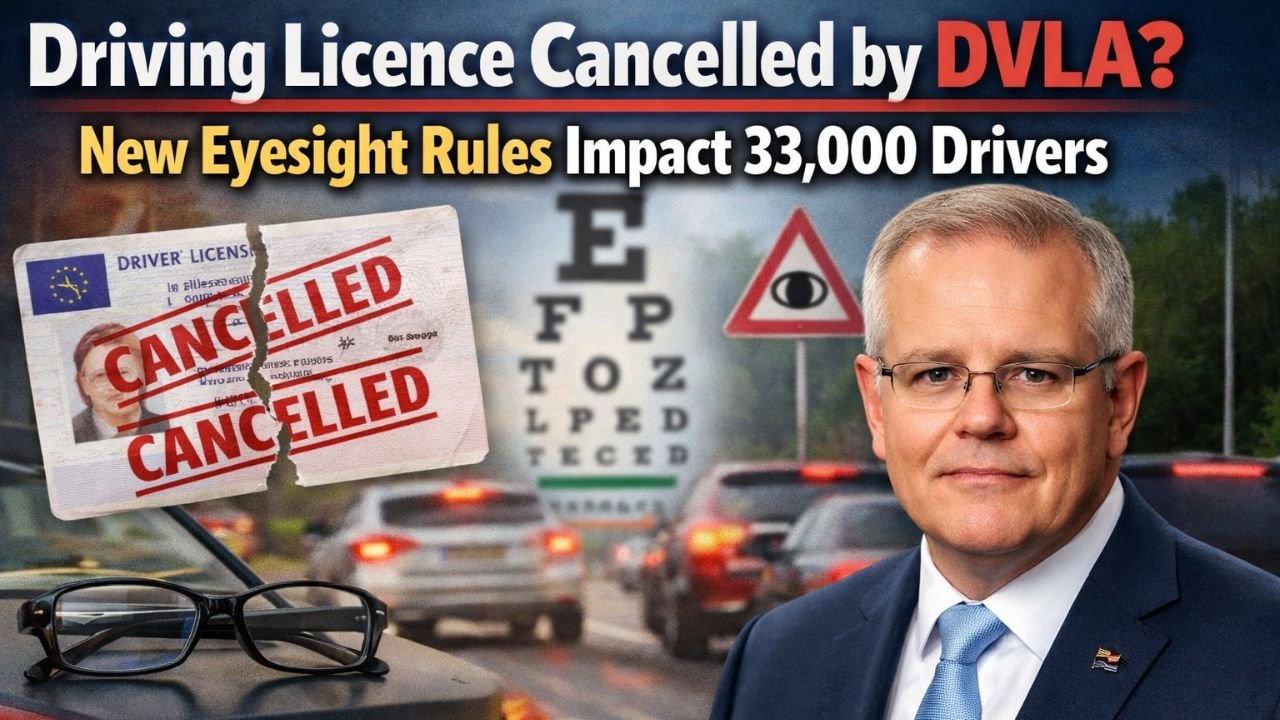
As the Driver and Vehicle Licensing Agency (DVLA) has begun to tighten its focus on the health of UK motorists, an increasing number of driving licenses, 33,000 in fact, are being revoked or not issued, due to eyesight issues? The DVLA has implemented eyesight related driver’s license in an effort to improve overall safety on the road, and the safety of those driving alongside the license holder. Most driver’s find out they have lost their license during an operational license check or when they’ve received a fine and are being asked to pay it. The DVLA has made these policies official to help curtail accidents caused by poor eyesight of those driving, and help those driver’s not see the danger they are involved in, and those driving around them.
The Science Behind the Sight Crackdown
The cancellations are based on the legal definitions of visual acuity and adequate field of vision. The UK standard of driving safety is the ability to read a standard vehicle number plate at 20 metres. Although this may sound easy, it involves a Snellen scale of at least 6/12. The DVLA has also put more weight on peripheral vision. With regard to the side vision that is needed to see pedestrians, and vehicles that are merging, conditions like glaucoma, cataracts, and age-related macular degeneration can ‘tunnel’ a persons vision. There has been a shift in the 2026 guidelines towards more proactive reporting and away from an honesty based system to one that involves doctors and law enforcement in reporting people that have not met the requirement in order to be driving.
Understanding the Key Vision Requirements
In order to remain legal on the roads, drivers must meet and pass a set of vision criteria that have been established. It’s not enough to just feel as though your vision is good enough because you could be challenged by the DVLA and be asked to provide proof of your vision. The following table lists and shows the criteria that all car and motorcycle drivers will be expected to have in 2026.
| Requirement Type | Legal Standard for UK Drivers | Notes |
|---|---|---|
| Number Plate Test | Read clearly from 20 metres | Can use glasses or contact lenses |
| Visual Acuity | At least 6/12 (0.5 decimal) | Measured using both eyes together |
| Field of Vision | At least 120 degrees horizontal | Must be free of significant defects |
| Notifiable Conditions | Glaucoma, Macular Degeneration, etc. | Must be reported immediately to DVLA |
| Renewal for Over 70s | Every 3 years | Requires a self-declaration of fitness |
The Impact on Older and Long-Term Drivers
The impact of these actions varies, but the most notable changes have been seen in those driver over the age of 70. Drivers in this age range are required to have their licenses renewed every three years. The changes in regulation throughout February 2026 are increasing the level of screening required for renewing these licenses. Many of the 33,000 revoked licenses come from people who have developed “gradual vision loss,” or the type of vision loss that simply gets worse over time without the person realizing their vision is getting worse. Vision loss is a legal stopping point for people to drive. The loss of a driver’s license is a massive legal and social loss, which can mean people must use public community transport or be driven around by friends and family.
Legal Obligations and Financial Penalties
It is the driver’s responsibility to ensure the vehicle is roadworthy. Under Section 92 of the Road Traffic Act, a failure to inform the DVLA of a ‘notifiable’ medical condition is a criminal act. If you cause an accident and it is established that you did not meet the eyesight requirement, your insurance will be cancelled and you will be responsible for the damages. In addition, police have the power to initiate a roadside eye test during a traffic stop. If a driver cannot read the license plate from 20 meters away, the police have the right to remove the driving license on the spot for that reason. Apart from the driving license suspension and loss of driving privileges, drivers can also be fined for up to £1,000 and possibly face a prosecution if their poor eyesight is the reason of an accident.
Staying Safe and Keeping Your Independence
The most effective way to protect your driver’s license is through proactive health management, not reactive compliance. Optometrists recommend comprehensive eye exams every two years. For people over 70, eye exams are recommended every year. Eye exams do more than check your prescription, they also check for early signs of cataracts. If cataracts are detected early, surgery can restore vision to a level that meets DVLA standards. Keeping your prescription glasses current is also important. Many drivers use glasses with outdated prescriptions. Keeping your eye health a priority ensures your right to drive is maintained and improves safety for other drivers.
FAQs
Q1 Can I drive if I can only see out of one eye?
Yes, if you can see out of one eye you can still hold a private car or motorcycle license. The vision that is remaining must meet standard 6/12 acuity and have a full field of vision. You must also be able to pass a 20-meter number plate test.
Q2 What happens if I don’t pass a roadside eye test?
If a police officer instructs you to read a license plate and you are unable to do so at a distance of twenty meters, you will be reported to the DVLA. In most cases, the DVLA will describe your case as an emergency. Your driving privileges will be suspended until you can prove your vision has been corrected.
Q3 Do I have to inform DVLA that I’ve started wearing glasses?
No, you do not have to tell the DVLA that you have started wearing glasses. You must wear contacts every time that you drive if they are needed to meet the eyesight requirements.