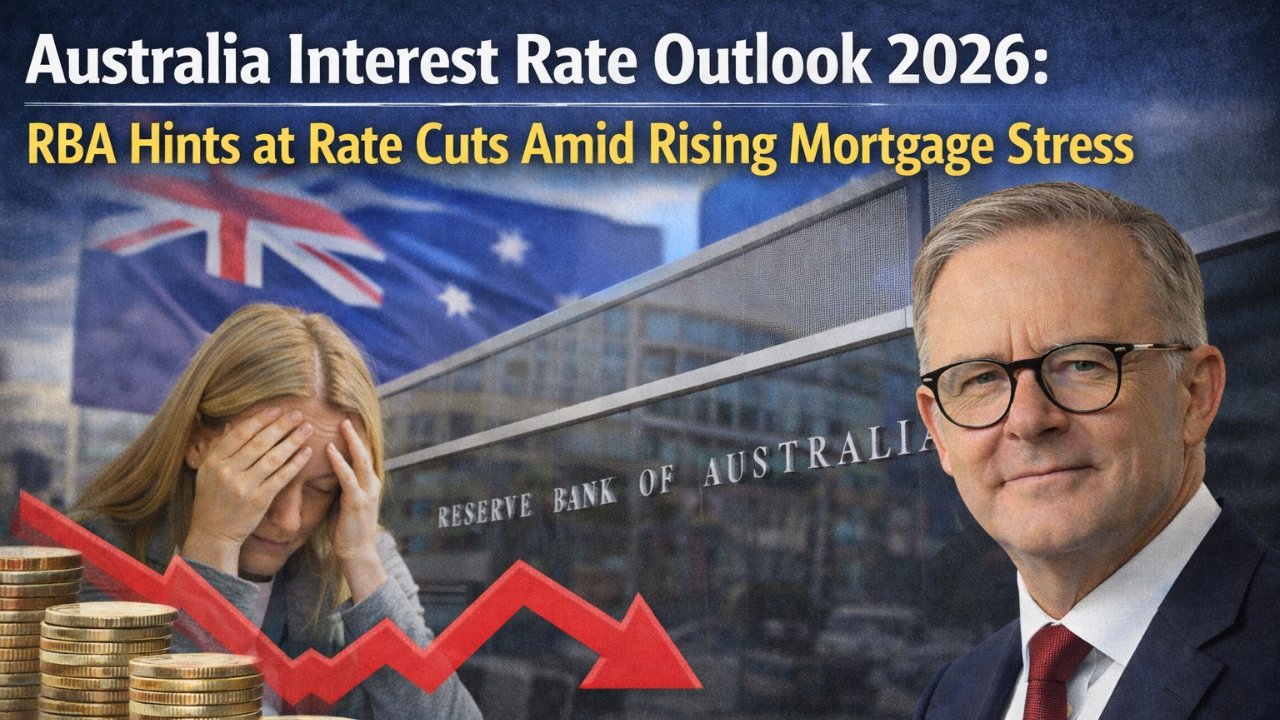
In 2026, Australia’s economy is going to have a tough time trying to find the best approach that balances concerns over inflation and the apparent signs of strain on households. Australia’s central bank (the RBA) is attempting to balance household strain with the RBA’s concern over inflation. In response to increasing concerns over price inflation, the RBA implemented a series of adjustments to the cash rate that culminated in a cut to 3.6% in August 2023. The RBA then increased the cash rate to 3.85% in February 2024 in response to stiffening price growth and increased global uncertainty. However, recent board minutes and data suggest that the RBA’s concerns over inflation should improve. Families and businesses are watching mortgages and the strain they put on households in a financial crisis. Unemployment is increasing and household consumption is on the decline. This makes it possible for the RBA to ease the cash rate.
Recent RBA Moves and Economic Backdrop
The RBA’s journey over the past year exhibits a story of caution surrounded by uncertainty. After a peak of 4.35 percent in early 2025, three consecutive cuts of 0.75 percentage points have been made in an attempt to support growth, whilst inflation is still moving towards the bank’s 2-3 percent target. Variable mortgage rates, on average, fell 75-80 basis points, which increased borrower sentiment. However, by February 2026, renewed hikes have reversed some of those positives—first at 3.85 percent with projections for more increases should OPEC find an oil cartel, or wage growth accelerates. Economists at Commonwealth & Westpac have noted that data dependency rules the day—specifically with the U.S. in an unpredictable place under President Trump. On the home front, economic growth is at a staggering 1.5 percent whilst core inflation is at 3.2 percent which, as a result, has kept the board watchful. Demand cooling and lingering cost pressures are the main contributors to the RBA’s perplexity.
The Rise of Mortgage Stress
Roy Morgan’s most current survey has found that mortgage stress is a significant problem among Australian homeowners, especially with new surveys able to determine how stressed these households become compared to previous surveys. In statistics, new surveys show that over 449,000 households remain…?(last weeks paper states that this is a good estimate) \ canadian mortgages On the other side of the equation, further peak stress data would occur with another forecaster presuming a March peak interest rate of 0.25, which further estimates over 1 million households to be distressed (distressed in this case is spending over 30% of your income on mortgage/bill payments). Thus, on top of the mentioned, even minor rate increases will put over 600000 mortgage holders in distress. ( this level of mortgage stress has resulted in even the rental market not being insulated. As will be violently ripped apart, the rental market is left with a vacancy rate less than 1%). Consequently, the stress in the aforementioned sectors is still impacting retail and construction, which have recently stalled due to the high rates. In the latest release, the RBA’s governor has acknowledged that high rates have insulated (and still have) many vulnerabilities in the economy.
2026’s Key Rate Projections
Inflation has a large impact on interest rate cuts. Economists are anticipating large cuts in the future. Here is a summary of possible future cash rates based on the current economic situation:
| Scenario | Cash Rate End-2026 | Key Triggers | Borrower Impact |
|---|---|---|---|
| Limited Easing | 3.35-3.60% | Inflation hits 2.5%, unemployment rises to 4.5% | Repayments fall $100-200/month |
| Status Quo | 3.85-4.10% | Sticky wages, global shocks | Stress affects 15-20% of homes |
| Further Hikes | 4.35%+ | Oil spikes, strong jobs data | 1M+ households at risk |
This outlook shows the dependability of bank outlooks and RBA projections. This situation is based on the current quarterly data, as the market is predicting a 60% chance of an interest rate cut to occur in the middle of June. As a result of market changes, term savings deposits are expected to fall below 4%. Property investors will need to stress test their spending, and set their interest rates. Additionally, their savings will need to be used for purchasing in the diminishing market.
What Rate Cuts Could Mean for Households
If cuts happen (august is the likely date based on board commentary), the relief would be tangible. A return to 3.6 percent would mean $250 saved every month for the average variable-rate borrower which is $250 freed for spending and debt reduction. This could lead to a slight rebound in housing as 2025 is expected to flatten. Retail and construction would be the beneficiaries of cheaper credit and could lead to a 0.5 percent boost to GDP. The RBA warns against premature easing as it could lead to inflation. The balancing act for policymakers is creating and supporting jobs without overheating the economy. Homebuyers waiting for 2027 should find it easier to enter the market as first-home buyer grants and stamp duty changes could be a response to any RBA pivot. Overall, 2026 is expected to be a year of waiting and watching. Rate cuts could help ease pressure.
Navigating Uncertainty Wisely
In this environment, flexibility is key for borrowers and savers. Review loan terms every few months and consider both fixed and variable loans, and savings should be 3-6 months of expenses. Financial counselors report a significant rise in demand, which reflects the very real human toll of high and prolonged interest rates. The RBA is expected to release crucial information in May and financial market participants will be watching closely to see how this influences markets. As Australia weighs the cost and benefits of high interest rates, having a plan will be essential to navigate through 2026.
FAQs
Q1: Will rates definitely fall in 2026?
The timing depends on how inflation is, but it is likely cuts will happen before the end of the year.
Q2: What is the economic impact of mortgage stress?
It limits expenditure and economic expansion, and may trigger the RBA to mitigate recession.
Q3: Is it wise to fix my mortgage now?
If you value peace of mind over possible future savings from rate cuts, it is worth considering.