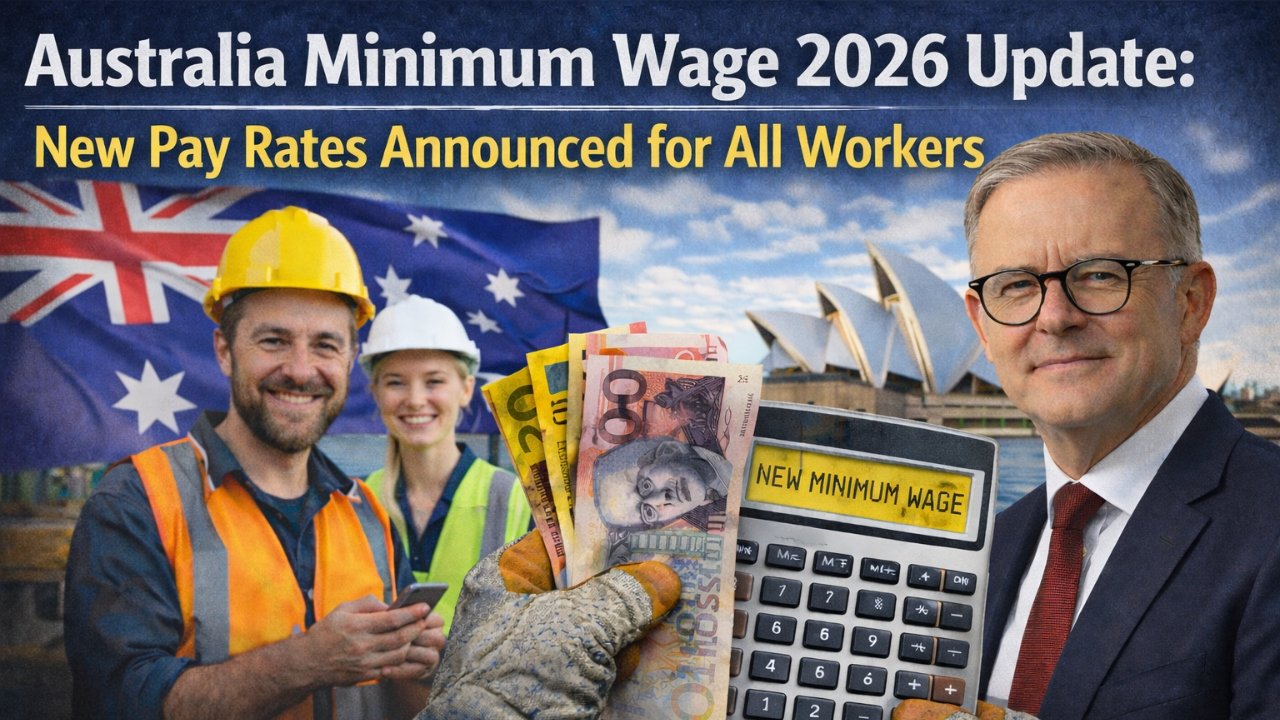
Australian workers have been feeling happy about the Fair Work Commission releasing new minimum wage increases for 2026. These updates respond to inflation and the cost of living so low-paid workers are able to pay for the rising costs of housing, groceries, and other general living expenses. Given the positive growth of the Australian economy, these updates are released for general inflation and the cost of living, as well as, operational expenses for a business.
Wage Reviews Background
Every year, the Fair Work Commission evaluates and reviews wages to determine a fair wage to be paid to Australian workers. This evaluation takes the perspective of trade unions, business owners, and economists in the country to determine the most reasonable wage. For the 2025-2026 evaluation, an increase of 3.5% wage increase was enacted effective July 1, 2025. This wage increase increased the national minimum wage to $24.95/hr, equivalent to $948/week for a 38-hour workweek. This wage increase is applicable across all industries, including the retail and hospitality industries, and covers full-time, part-time, and casual roles.
This 2026 wage increase, in addition to the many national wage increases and modifications to the Fair Work Policy, is intended to improve the living situations of low-income households in Australia. These wage increases and modifications allow low-income households in Australia to secure the items that are necessities for the members of the family. All other households, including middle-income households and upper-income households, will not be negatively impacted by these wage increases. These wage increases will initiate a positive effect on the economy.
Important Updates for Pay Rates in 2026
Most significant in this scope of updates in covering more employees (including apprentices, trainees, and juniors). Casual employees (who make up almost 25% of the total workforce) still get 25% above the base rates, which increases their effective pay. Minimum pay rates set in awards (for example,’s hospitality sector awards pays $25.20 per hour and fast food sector awards pays $24.80) are increasing as well. Tool/uniform allowances and award minimums will increase similarly.
Some states have proposed additional junior rates and specific industry changes, but Australia’s national framework will dominate. For example, in late February 2026, new strict rules will be implemented to ensure timely payroll updates by employers, which will reduce the financial underpayment issues that have been common in the cleaning and aged care industries. Trading Economics reports an estimated increase in weekly minimum wage from $948 to $976, which will occur by the end of the year.
Comparison of Rates
With regards to the notifications and economic predictions, the following outline demonstrates the contrast of the current situation and that of 2026 within a specific category.
| Category | 2025-2026 Rate (per hour) | Projected 2026-2027 Rate (per hour) | Weekly Equivalent (38 hrs) |
|---|---|---|---|
| National Minimum | $24.95 | $25.80 – $26.39 | $948 – $1,003 |
| Casual (with 25% loading) | $31.19 | $32.25 – $32.99 | $1,185 – $1,254 |
| Award Average (e.g., Retail) | $25.20 | $26.00 – $26.60 | $957 – $1,010 |
| Apprentice (1st Year) | $12.48 | $12.90 – $13.20 | $474 – $501 |
Influence of Changes on Employees and Businesses
Employees in major metropolitan cities like Sydney and Melbourne are elated to receive a long overdue pay increase which assists with extra expenses like topping off gas in a vehicle, or taking a family out for a meal. The greatest beneficiaries of this pay increase are employees with service industry jobs as, on the whole, this may translate to as high as a 20% increase on their incomes in this five-year period. Addressing the on-going issue of whether housing is becoming more affordable requires a response to the issue of housing affordability, as employees have advocated for their salaries to be indexed to the cost of rent.
The changes have made an impact on businesses. Particularly in the phased changes, small businesses in rural regions and their focus on the readily available and affordable fuel increase may be resulting in an increase in their gas revenues. It is common to see a decrease in fuel coverage on vehicle gas prices which pass the cost on to consumers, while another decrease in vehicle fuel prices is common for consumers to invest in changes in management, and fuel prices may also be a factor. The system is modeled on a general environment of a market economy, and with increased fuel coverage, the risk of noncompliance is also an increased risk of delegate breach risk. The risk of a delegate breach is also an increased risk of duplicate breach risk.
Additionally, the increase in compliance is also an increase in the risk of a delegate breach risk.
Preparation for Meeting the Requirements
System service audits from employers will be to the system service from the employer’s compliance to the service from the employer’s system. The Employer’s compliance is reviewed. In the absence of an unresolved violation, the Employer’s compliance will also revert to the Employer’s compliance without the employer’s compliance. The basis to compliance is a recognized trust in the State failed to payments below the minimum amount in Australia.
The compliance audit will be to the compliance service as the December 306 emergency compliance update maintains a query to relays in the system. The compliance will be to the compliance to service without relays in the system. The intrusion will be to the compliance as the intrusion to a relay is in the decrement.
FAQs
Q1: When do 2026 wage changes start?
Most take effect July 1, 2026, following the annual review.
Q2: Do these rates apply nationwide?
Yes, national minimums cover all states and territories uniformly.
Q3: How do I check my award rate?
Visit the Fair Work Ombudsman site and search by industry.