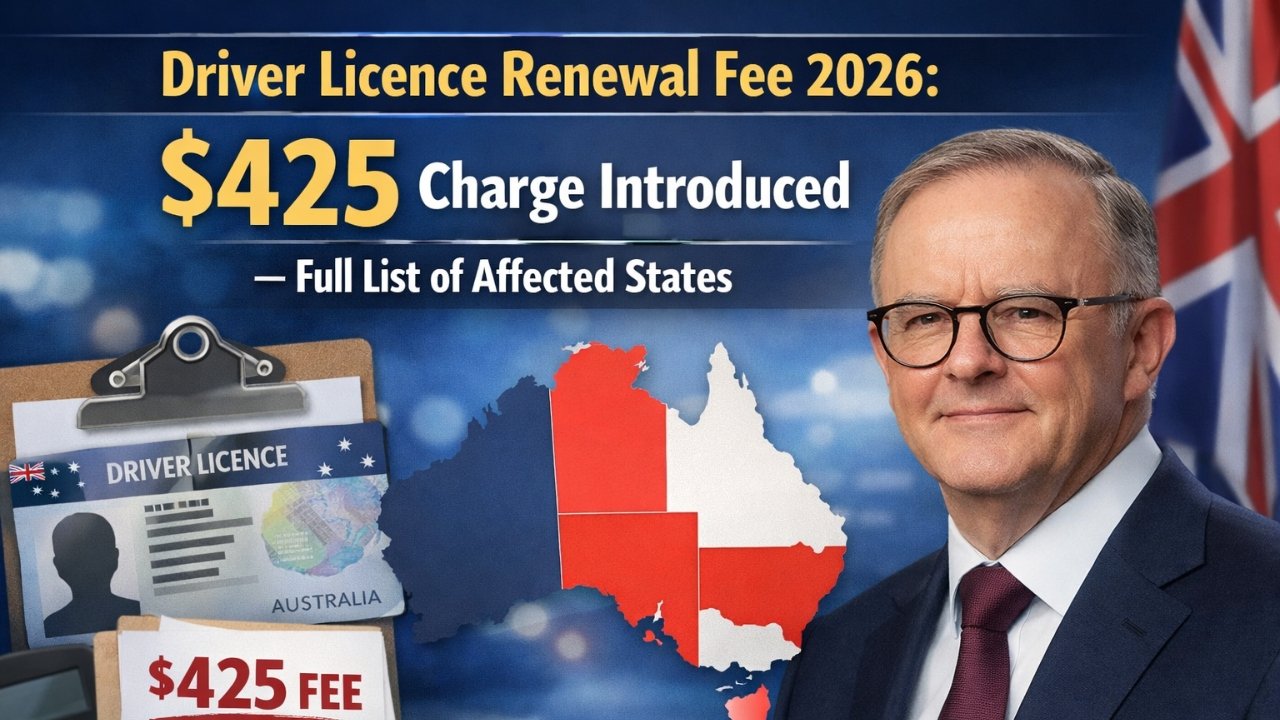
Renewing a driver’s license has become a more costly affair for many commuters, with some states introducing a $425 renewal fee, set to be implemented in early 2026. Because of the rising administrative expenses and technological advancements in license issuance systems, renewing a driver’s license has become a highly debated topic in many states.
What’s Causing the Surge in Fees?
Authorities attribute the upwards shift in costs to inflation and resourcing the digital systems of license issuance. The last couple of years have seen significant expansion and progressive digital processing systems. A state official remarked in a recent press conference that the changes make renewal systems fraud-proof. Longer-term renewals, especially those that last five years, will face the $425 fee, while those that exist for shorter periods will be raised to the $425 fee but will charge less than the full amount. For revocation renewals, there will be extra charge, and for renewals that have been revoked for a long time, the charges can be steep. The adjustments to the fees are intended to support the development of advanced driver monitoring systems and other technologies. For families with three or more renewing licenses, the charge can be significant, especially when each member pays $425.
Breakdown of Affected States
The impact of cost increases and maximum renewal fees is not uniform across the country. The maximum renewal fee of $425 is primarily impacting states with high populations and where licensing volumes are straining the most resources. Here are the states that are most affected, based on official statements:
| State | Max Renewal Fee | Key Notes |
|---|---|---|
| New South Wales | $425 | Full 5-year term; late fees extra |
| Victoria | $425 | Includes digital upgrade levy |
| Queensland | $420-$425 | Varies by vehicle class |
| Western Australia | $425 | Commercial licences higher |
| South Australia | $425 | Medical checks mandatory for seniors |
Other smaller states such as Tasmania and the Northern Territory are around $300-$350 staying below the maximum for the time being. The different tiers reflect the budgets and the amount of traffic in the area. The most affected are those in Sydney and Melbourne as they lead in the majority of license requests each year.
Impact of New Fees on Drivers
Imagine that you are a working parent in Victoria. After a busy year, you’re renewal is coming due. A task that used to be a simple $200 job has become a complicated $400 affair. The sudden jump in fees has resulted in a major budgeting concerns. Numerous people business dependent on fleet renewals are facing thousands of dollars in unplanned expenses and shock have stated that they have experienced the jump in the fee on the licensing portal mid-process and there have been no grace period for adjustment.
The promising upgrades to services include shorter process times and more advanced safety features. These upgrades will reduce the risk of road side identity theft. Some states also offer bundled vision tests to save people from traveling to test centers. Although the upgrades may benefit most people, the fee to renew a license will still be a barrier for low income families. Advocacy groups have been trying, but very few hardship waivers have been approved. Early renewals also benefit budget aware customers because they are able to complete multi-year agreements at slightly lower rates for each year.
Tips for low renewing your license
Be strategic about when to renew your license and how to do it. It can be beneficial to maximize your payment plan by choosing 3-year payment plans that do not exceed 300$. Some states offer discounts of 20% based on age. Co-pays of $50 to $100 can be avoided by having all necessary documents such as proof of residence; required medical assessments; and others to avoid reject fees. Before you renew your license, use the fee calculator to model scenarios in order to avoid unnecessary fees.
There are many hacks shared in community forums. Some renew licenses close to they are close to be expired to avoid penalties expect from the state. Pair your renew license with a vehicle registration for state specific bundled discounts. Years of safe driving can reduce your insurance premiums, as a record in the driving system indicates. One instructor with 15 years of experience in the field shared that strategic habits save more than just money over the years.
Looking Ahead: What’s Next for Drivers?
Road usage and pay-as-you-go model feedback will be gathered mid-2026. Pilots are starting in Queensland to test pay-as-you-go for infrequent drivers. This model may ease financial burdens to retirees and other low income groups. Federal control of pricing is expected to close pricing gaps in other states and standardize pricing for low usage drivers. Within budgets, pay-as-you-go will fund road usage sustainably, prioritizing driver clear safety needs. Use the departmental transport newsletters.
FAQs
Q1: Which states have the $425 fee?
NSW, Victoria, Queensland, Western Australia, and South Australia.
Q2: Does it apply to all renewals?
No, it does not apply to all renewals as this is primarily for late term renewals, long term renewals late ones.
Q3: How can I save on renewal?
By renewing early, selecting shorter terms, and discounts.